

advisor marketing
The Athlete Advisor's News-Cycle Marketing Playbook
Capital Turbine · · 7 min read
If you're trying to build a practice around athletes, the sports calendar hands you more marketing opportunities in a single month than most advisors see in a year. The problem is most advisors don't use them. A sponsorship announcement drops, a draft commit goes viral, a season tips off — and an advisor who works with athletes sits on the sideline while the moment passes. This guide is about getting off it.
Why the News Cycle Is Your Calendar
Athletes and their families pay attention to what's happening in their sport. That's the whole point. A piece of content that arrives the same week a major NIL announcement drops, a season kicks off, or a draft combine is announced will feel relevant in a way that a generic "financial planning tips" post never will. Relevance earns attention. Attention builds trust. Trust wins clients.
The NIL market makes this more urgent every year. NIL total payments to college athletes are projected at $2.4 billion in 2026, up from roughly $1 billion in 2025, according to Opendorse data reported by the Houston Chronicle. That money creates financial decisions athletes and their families are actively trying to figure out — taxes, contract structure, spending, savings. If your content speaks to those questions at the moment they're top of mind, you're already ahead of every advisor publishing generic retirement content.
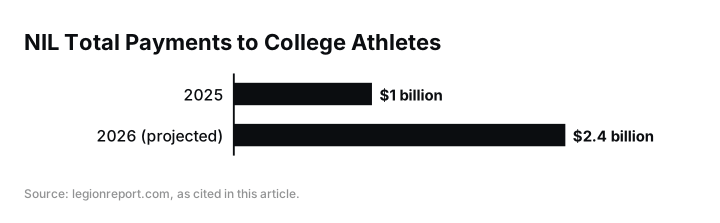
NIL payments to college athletes are projected to more than double in a single year, creating urgent financial decisions for athletes and families.
The Recurring Triggers to Build Your Calendar Around
Athlete marketing works best when you plan around the events the sports world already moves with. Here are the recurring triggers worth putting on your content calendar now.
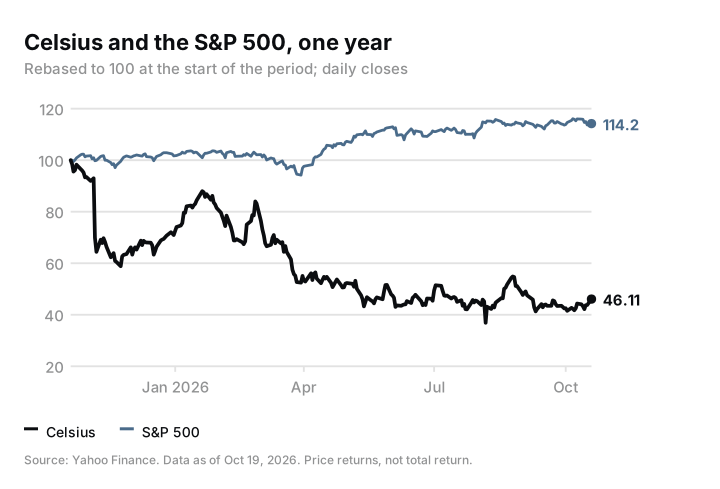
Celsius, one of the brands actively signing college athletes to NIL deals, illustrates the corporate momentum driving the NIL sponsorship market.
Season starts and ends. The 2026 NFL regular season opened September 9. The 2026-27 NBA season tips off today, October 20, with a triple-header on NBC and Peacock. Every season open and close is a natural entry point for financial content tied to that sport — managing an influx of signing bonus money at the start of a contract year, planning in the offseason when income may change, understanding what happens to guaranteed money if a player is cut.
NIL announcements. These drop constantly now. In late August 2026 alone, Celsius signed Michigan QB Bryce Underwood, Oregon QB Dante Moore, Texas WR Cam Coleman, and Ohio State WR Chris Henry Jr. to a 2026 NIL football roster. Venmo announced a nine-athlete "Money Moves" NIL class. SeatGeek signed seven college football players as brand ambassadors for its third consecutive year in the NIL space. Each of these announcements reached millions of fans and families. An advisor post about what athletes need to know before signing a brand deal — tax treatment, contract terms, building a team around the deal — is exactly what a parent or agent is searching for the day it drops.
Sponsorship and jersey patch deals. Teams are inking jersey patch sponsorships, stadium naming rights, and new media deals regularly. Missouri announced a jersey patch sponsorship deal with Ambetter Health. Kansas State announced a jersey patch deal with Purple Wave Auction. These generate financial news for athletes on those rosters — and questions about how team-level deals affect individual player compensation.
Draft commits and transfer portal windows. A five-star high school commit or a high-profile transfer is a major life and financial event. NIL brand deals prevalent in collegiate athletics are now trickling down to high school athletes as well, with high schoolers signing with Nike, Adidas, and Brooks ahead of their freshman seasons. The families of those athletes are asking financial questions right now, often without anyone guiding them.
Award season and All-Conference announcements. When an athlete's name climbs into the national conversation — a Heisman watch, a Butkus Award list, an All-NBA selection — their NIL value rises with it. Content timed to those moments, specifically about how to manage rising income and increasing visibility, will reach audiences that are paying close attention.
How to Actually Execute When Something Breaks
The goal when a news trigger hits is to publish something relevant within 48 hours. That window is where attention is highest. After 72 hours, most feeds have moved on. This requires two things: a library of adaptable content frameworks ready to deploy, and a content system that doesn't make you start from scratch every time.
Sport-specific content is not optional at this level. A post about "what athletes should know about NIL contracts" is fine but generic. A post about "what a college QB should know before signing a national energy drink deal" — timed to the week Celsius announces its roster — will resonate in a way the generic version never will. Name the sport. Describe the financial situation that sport creates. Reference what's happening in the news cycle without rendering an opinion on the deal itself.
Distribution matters as much as the content. Athletes, agents, and parents spend real time on Instagram, X, and LinkedIn. Email reaches the people already in your audience. Paid social lets you target audiences by interest — college football fans in specific markets, parents of college athletes — at the exact moment a story is breaking. A well-placed campaign the week of NFL Opening Night, targeted to professional football fans in your metro area, can generate meaningful visibility for a fraction of what a generic awareness campaign costs.
The Sports Calendar Gives You Structure, Not Creativity
You don't need a different idea for every week. You need a handful of content themes — NIL tax planning, managing a signing bonus, preparing for free agency, building wealth on a short career timeline — and you map them to the moments in the sports calendar where they naturally belong. NFL training camp is for signing bonus content. The NBA trade deadline is for contract uncertainty content. The college football transfer portal window is for NIL planning content. The calendar tells you when to publish. Your expertise tells you what to say.
If your practice is built for athletes, your marketing should feel like it. Athletes and their families can tell when an advisor actually understands their world — and when they're just hoping the word "athlete" in a headline will do the work. If you're thinking about how to build a marketing system that keeps pace with the sports news cycle, our team is happy to walk through what that looks like.
Common questions
What types of news events create the best marketing opportunities for athlete advisors?
The highest-value moments are those that directly touch an athlete's financial life: NIL deal announcements, season openers, draft commits, sponsorship signings, award nominations, and transfer portal decisions. These are events where athletes and their families are already thinking about money, contracts, and planning — which makes financial content feel timely rather than intrusive.
How quickly should an advisor publish content after a news trigger?
Within 48 hours is the window where audience attention is highest. After 72 hours, most social feeds and news cycles have moved on. This means your content system needs to be fast and adaptable — not built for weeks-long production cycles. Template-driven content frameworks that can be customized quickly are a practical solution for advisors who can't dedicate full-time staff to marketing.
Does sport-specific content perform better than general athlete content?
Yes, meaningfully. Content that names a sport, describes the financial situations specific to that sport, and maps to something happening in that sport's news cycle will earn more trust from athletes, agents, and families than generic "athlete financial planning" content. Specificity signals that you understand their world — which is the first thing a prospective client is evaluating when they encounter your marketing.
Sources
- NIL total payments to college athletes projected at $2.4 billion in 2026
- Celsius signed NIL deals with Bryce Underwood, Dante Moore, Cam Coleman, and Chris Henry Jr. in August 2026
- SeatGeek signed seven college football players as NIL brand ambassadors for its 2026 class
- The 2026-27 NBA season starts October 20, 2026
- NIL brand deals are now trickling down to high school athletes
This article is for educational purposes only and does not constitute financial, tax, or legal advice. Individual circumstances vary. Please consult qualified professionals for advice specific to your situation.